Written Commentary
MORNING AG OUTLOOK
DAILY SOY COMPLEX COMMENTARY
Harvest in line with average, currency movement remains a bearish factor.
OVERNIGHT CHANGES THROUGH 6:06 AM (CT):
SOYBEAN: +0.1, BEANOIL: +0.0, SOY MEAL: +0.2 10/27 5:32 AM: Soybeans (JAN 27) prices overnight are up 4 3/4; Soymeal (DEC 26) up 1.40; and Soyoil (DEC 26) down 0.36. Soybean open interest as of October 26 was down 17,466 contracts, soymeal down 4,756 contracts, and soybean oil up 4,262.
Chinese Dalian (JAN 27) Soybeans down 0.30%, Soymeal down 1.39%, Soyoil down 1.92%, Palm oil down 2.45%. Malaysian Palm was down 1.82%.
NEAR-TERM MARKET FUNDAMENTALS: Beans are continuing the recovery from yesterday’s low this morning and volatility has eased in the Brazilian currency, with losses of roughly 11% from Friday’s close. The Real break will boost Brazil’s competitiveness and is likely to encourage closer relations between Brazil and China, which adds a new bearish force for bean prices in the near-term. SinoGrain sold 33.7% of the 512,000 tonnes offered at the reserve auction overnight. Traders will be looking for a flash sale announcement this morning to indicate whether China was buying on yesterday’s sharp break. Harvest progress reached 79%, in line with estimates and compared to 77% average. The government was shut down at this time last year so there is no data to compare from a year ago. Iowa, Kansas and Nebraska are all 6% – 7% behind average. Over the next week, precipitation chances will increase in the central and northern Midwest with heavy rains expected early next week across Iowa, eastern Nebraska and Minnesota where harvest delays are likely. Bean open interest dropped nearly 17,500 contracts yesterday and has fallen sharply for the last 4 sessions, sinking nearly 90,000 contracts over that span as long liquidation has been ongoing. CME raised the price limit for beans starting today from $0.70-$0.85, meal limits were unchanged at $20 and bean oil raised to 450 points from 350. Despite the minor bounce this morning, current fundamentals suggest selling on rallies will continue due to the strong dollar and weak Brazilian currency, along with a lack of significant weather issues in Brazil.
Soybean export inspections for the week ending October 22 came in at 2,476,453 metric tonnes. Cumulative inspections year-to-date are 9,705,412 metric tonnes which is 42.4% above last year. This is 21.2% of the USDA’s forecast for the 2026-27 marketing year versus the five year average of 17.2%.
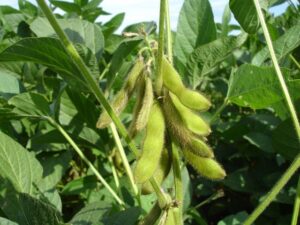
Soybeans harvest was up 15% on the week to 79% complete as of October 25. That’s 3% above the 10-year average. The top producers were Illinois 81% (+15%), Iowa 78% (+21%), Minnesota 93% (+11%), Indiana 75% (+16%), and Missouri 65% (+16%).
DAILY CORN COMMENTARY
US harvest hits 60%, higher Argentina production forecast
OVERNIGHT:
CHANGES THROUGH 6:06 AM (CT): -0.1 10/27 5:32 AM: Corn (DEC 26) prices overnight are down 1/2. Corn open interest as of October 26 was up 9,378 contracts. Chinese Dalian (JAN 27) Corn was down 0.09%.
NEAR-TERM MARKET FUNDAMENTALS: Minor weakness overnight can be attributed to higher estimates for Argentine production and better prospects for Black Sea peace talks, which keeps the edge with the bears. Russia this morning commented that talks with Ukraine and the US will begin in Abu Dhabi in November, but a specific date was not mentioned. All sides seem more interested in working on a peace deal than they were a month ago. US harvest is 60% complete, in line with the guesses and the 5-year average of 66%. Surprisingly, Iowa remains 20% behind average and South Dakota and Michigan are 18% and 15% behind average, respectively. Delays are likely over the next week as rain moves in late this week and into early next in the central Midwest. The US Attache pegged Argentine’s corn production for 2026/27 at 62 million tonnes, well above USDA’s October supply and demand number at 55 million, due to higher planted area. Mexico’s corn imports through the 3rd quarter were 19.46 million tonnes, up 5.8% year-over-year. The Philippines raise their corn import quota by 500,000 tonnes. The Brazilian currency has lost about 11% of its value versus the dollar this week, enhancing the competitiveness of Brazilian corn. Weekly export inspections yesterday came in at the low-end of the guesses as shipments were slow. The strong bean export program is taking precedence over corn exports. Yesterday’s low marked a $1 a bushel drop in December corn since early September and while prices are significantly oversold, buyers are likely waiting for a technical bottom before buying the break. With 40% of the harvest yet to go, hedge pressure will continue to be a strong headwind this week.
Corn export inspections for the week ending October 22 came in at 625,233 metric tonnes. Cumulative inspections year-to-date are 9,776,509 metric tonnes which is 7.7% below last year. This is 11.8% of the USDA’s forecast for the 2026-27 marketing year versus the five year average of 9.1%.
Corn harvest was up 16% on the week to 60% complete as of October 25. That’s 1% below the 10-year average. The top producers were Iowa 47% (+21%), Illinois 74% (+11%), Nebraska 55% (+18%), Minnesota 65% (+27%), and Indiana 61% (+15%). Corn rated good-to-excellent were unchanged at 56% as of October 25, a new record low for this date. Good/excellent ratings hit record lows for October 25 in Colorado 27% (prev 2013), Kansas 40% (prev 2013), North Carolina 14% (prev 2008), North Dakota 31% (prev 2013), Nebraska 41% (prev 2017), South Dakota 39% (prev 2017), and Texas 35% (prev 2009). Poor-to-very-poor was 18% (+1%). Good/excellent is 6% below its 10-year average. Among the 18 states reporting, 5 improved, 3 declined, and 10 held steady. The leading producers were Iowa 73% (+1%), Illinois 60% (0%), Nebraska 41% (-4%), Minnesota 64% (+2%), and Indiana 64% (0%)
DAILY WHEAT COMMENTARY
US planting on average pace, Kremlin says peace talks expected in November
OVERNIGHT DEVELOPMENTS:
CHANGES THROUGH 6:06 AM (CT): +0.0 10/27 5:32 AM: Chicago wheat (DEC 26) prices overnight are unchanged; Kansas City (DEC 26) down 3; and Minneapolis (DEC 26) down 0. MATIF Milling Wheat(DEC 26) was up 0.8%. Chicago wheat open interest as of October 26 was down 977 contracts and KC wheat was up 2,279 contracts.
NEAR-TERM MARKET FUNDAMENTALS: The market extended into new lows again yesterday as the rhetoric coming out of the Black Sea seems more positive for prospects for an end to the conflict. The Kremlin said this morning that US/Ukraine/Russia talks will begin in November in Abu Dhabi but did not give a specific date. The fact the Kremlin is announcing the talks seems to indicate Russia may be more serious about getting a deal done this time. Meanwhile, they sent 280 drones into Ukraine overnight along with ballistic missiles. IKAR reduced Russia’s 2026 wheat export total to 29 million tonnes, that’s 17 million below last year and way below USDA’s estimate at 40 million! US winter wheat sowing reached 76% complete, near average of 77% and top producer Kansas is also on average pace, while Oklahoma, Ohio and Arkansas are behind. Rain in the southern Plains is forecast for this weekend.
The US Attache estimated Argentine’s wheat production at 23 million, up from USDA’s 21.5 and Australia’s crop is now forecast at 32 million, above USDA at 31, but below last year at 36 million. The market continues to stairstep lower with the break since early September now reaching $1.83. The market has reached most downside objectives but has been unable to generate any bullish momentum, keeping the bears in the driver’s seat. Strong technical bottom signal is needed to draw buyers back in after the nearly 2-month break. CME raised the daily price limit for wheat to $0.45 from $0.35 starting today.
Wheat export inspections for the week ending October 22 came in at 183,824 metric tonnes. Cumulative inspections year-to-date are 7,418,676 metric tonnes which is 33.8% below last year. This is 35.2% of the USDA’s forecast for the 2026-27 marketing year versus the five year average of 42.8%.
Winter Wheat planting was 76% complete as of October 25, up 13% on the week. Planting progress hit a record low for October 25 in Oklahoma 51% (prev 2024). That’s 4% below the 10-year average. Top producers: Kansas 80% (+20%), Washington 98% (+2%), Oklahoma 51% (+14%), Montana 90% (+14%), and Colorado 98% (+7%).
Interested in more futures markets? Explore our Market Dashboards here.
